What Is Token-Based Authentication in Video Streaming? (2026 Complete Guide)
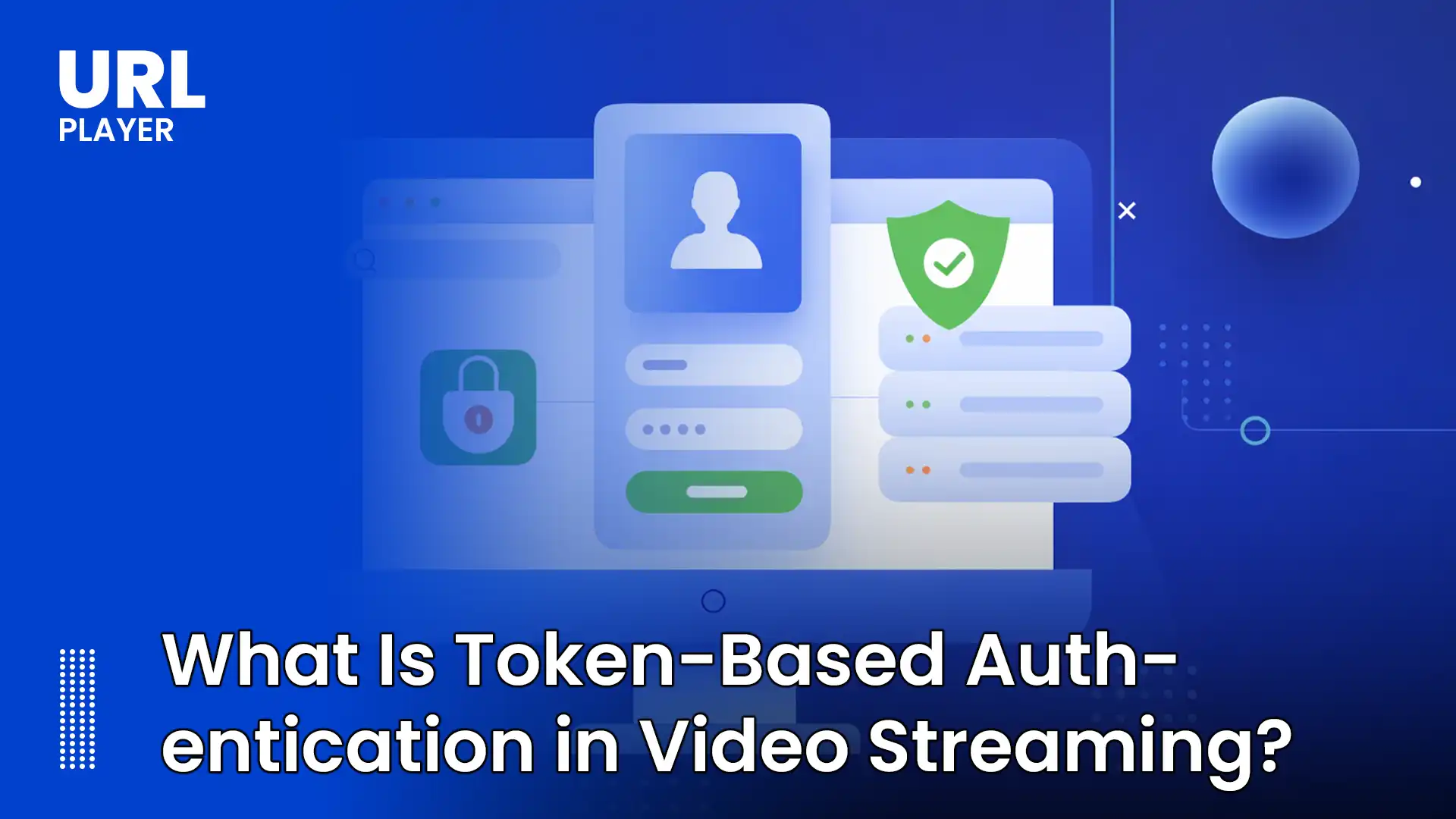
As online video streaming continues to dominate digital media consumption, securing video content has become a top priority for platforms, broadcasters, educators, and businesses. Whether delivering subscription-based movies, private training videos, live sports events, or enterprise webinars, protecting video streams from unauthorized access is critical.
One of the most widely used methods for securing video delivery is token-based authentication.
Token-based authentication ensures that only authorized users can access video streams — and only for a limited time under controlled conditions.
But how does it work?
Why is it necessary?
And how does it integrate with modern streaming technologies like HLS and MPEG-DASH?
In this complete guide, we will explore:
- What token-based authentication is
- Why it is essential for video streaming
- How it works step by step
- Types of streaming tokens
- Implementation best practices
- Security benefits and limitations
- How it works with CDNs
- Common mistakes to avoid
Why Video Streaming Needs Access Control?

Modern streaming typically relies on:
- HTTP Live Streaming (HLS)
- MPEG-DASH
- Progressive MP4
These protocols use standard HTTP delivery, which makes them:
- Scalable
- CDN-friendly
- Browser-compatible
However, HTTP delivery also introduces risk.
If a video stream URL is publicly accessible, it can be:
- Shared on forums
- Embedded on unauthorized sites
- Downloaded and redistributed
- Accessed without payment
Without access control, premium or private video content becomes vulnerable.
Token-based authentication solves this problem.
What Is Token-Based Authentication?
Token-based authentication is a security mechanism that grants temporary, conditional access to a video resource.
Instead of exposing a permanent public URL, the system generates a signed URL with an embedded security token.
This token contains:
- A unique signature
- Expiration time
- Optional IP address restrictions
- User session identifier
- Access permissions
When a user requests a video:
- The server validates the token.
- If valid, access is granted.
- If expired or invalid, access is denied.
This ensures controlled, time-limited access.
How Token-Based Authentication Works (Step-by-Step)?
Let’s walk through the typical process.
Step 1: User Authentication
A user logs into a platform.
Authentication may involve:
- Username/password
- OAuth
- Single Sign-On (SSO)
- API key
- Subscription verification
Once authenticated, the platform verifies access rights.
Step 2: Token Generation
The server generates a token containing:
- Expiration timestamp
- Video resource path
- Cryptographic signature
- Optional IP or device restrictions
The token is digitally signed using a secret key.
This prevents tampering.
Step 3: Signed URL Creation
The video URL is generated with the token attached.
Example structure:
https://cdn.example.com/video.m3u8?token=abc123&expires=1700000000
The user never sees the raw unrestricted URL.
Step 4: Video Request
When playback begins:
- The player requests the manifest file.
- The server verifies the token.
- If valid, the manifest is delivered.
Each segment request may also require token validation.
Step 5: Token Expiration
After the expiration time:
- The token becomes invalid.
- Requests are rejected.
- Access must be reauthorized.
This prevents permanent link sharing.
Types of Token-Based Authentication
There are several common approaches.
1. Signed URLs
Signed URLs are temporary links with encrypted parameters.
Advantages:
- Simple to implement
- CDN-friendly
- No additional cookies required
Best for:
- On-demand streaming
- Short sessions
- Public web delivery
2. Signed Cookies
Instead of embedding token in URL:
- Authentication data is stored in a secure cookie.
- Requests automatically include the cookie.
- The CDN validates it.
Advantages:
- Cleaner URLs
- Better for multi-file streaming
- Harder to share accidentally
3. JSON Web Tokens (JWT)
JWT is a structured token format.
It contains:
- Header
- Payload
- Signature
JWTs are widely used for API-based authentication and can secure streaming requests.
Advantages:
- Standardized format
- Flexible claims
- Easy integration with modern apps
Token-Based Authentication with HLS (M3U8)
When using HLS:
- The token protects the master playlist.
- Variant playlists may also require validation.
- Each segment request may validate token.
If the token is invalid:
- The manifest fails to load.
- Playback stops.
This prevents unauthorized users from accessing segment lists.
Token-Based Authentication with MPEG-DASH (MPD)
With DASH:
- The MPD file is protected by token.
- Segment URLs may also include token.
- Requests are validated by origin server or CDN.
Since the MPD reveals segment structure, protecting it is critical.
Integration with CDN (Content Delivery Networks)
Most professional platforms use CDNs.
CDNs support:
- Signed URLs
- Signed cookies
- Edge token validation
- IP filtering
Benefits of CDN-level validation:
- Reduced load on origin server
- Faster token validation
- Global scalability
- Distributed enforcement
CDN token validation improves both security and performance.
Security Benefits of Token-Based Authentication

Token-based authentication provides:
Time-Limited Access
Prevents permanent link sharing.
Tamper Protection
Cryptographic signatures prevent modification.
IP Restriction
Optional device or network binding.
Reduced Piracy
Makes casual sharing difficult.
Scalable Security
Works across large distributed systems.
It is an essential layer in professional streaming systems.
Limitations of Token-Based Authentication
While effective, it has limitations.
1. Screen Recording
Tokens do not prevent screen capture.
2. Token Capture
If improperly configured, tokens can be reused.
3. Poor Expiration Settings
Long expiration times weaken protection.
4. No Encryption by Itself
Token authentication controls access but does not encrypt content.
For high-value content, combine with DRM.
Best Practices for Token-Based Streaming Security
To maximize protection:
Use HTTPS Always
Encrypt all token exchanges.
Set Short Expiration Times
Typically 5–30 minutes.
Bind Tokens to IP Address
Prevents cross-network sharing.
Use Strong Cryptographic Keys
Avoid predictable signatures.
Protect the Manifest
Never expose raw manifest URLs.
Combine with DRM for Premium Content
Authentication + encryption = stronger protection.
Token-Based Authentication vs DRM
It’s important to understand the difference.
Token-Based Authentication:
- Controls access
- Prevents link sharing
- Validates requests
DRM:
- Encrypts content
- Prevents playback without license
- Protects against extraction
Token authentication controls who can access content.
DRM controls what happens after access is granted.
Both are often used together.
Real-World Use Cases
Token-based authentication is used in:
- Subscription video platforms
- Corporate training portals
- Educational institutions
- Pay-per-view events
- Sports streaming services
- Private enterprise video systems
Any platform that restricts access benefits from token-based security.
Performance Considerations
Properly implemented token validation:
- Adds minimal overhead
- Does not affect playback quality
- Scales with CDN edge validation
However, poorly configured validation:
- Increases latency
- Causes playback failures
- Leads to 403 errors
Careful configuration ensures both security and performance.
Common Mistakes to Avoid
- Using long expiration times
- Not protecting segment URLs
- Leaving manifest publicly accessible
- Using weak secret keys
- Forgetting to validate on CDN edge
- Ignoring clock synchronization issues
Misconfiguration is the most common cause of security failures.
The Future of Token-Based Authentication
In 2026 and beyond, token-based systems are evolving with:
- Zero-trust architectures
- AI-driven anomaly detection
- Device fingerprinting
- Behavioral authentication
- Short-lived streaming sessions
- Secure hardware-backed validation
Token-based authentication will remain a core layer of streaming security.
Conclusion
Token-based authentication is a foundational security mechanism in modern video streaming. By generating time-limited, cryptographically signed URLs or cookies, streaming platforms can restrict access to authorized users and prevent unauthorized link sharing.
While token-based authentication does not encrypt content itself, it plays a critical role in protecting manifests, segments, and streaming sessions. When combined with HTTPS, CDN validation, and DRM encryption, it creates a powerful multi-layer security model suitable for premium and enterprise video delivery.
As streaming ecosystems continue to grow in scale and complexity, token-based authentication remains one of the most effective and scalable ways to secure video content in 2026.